
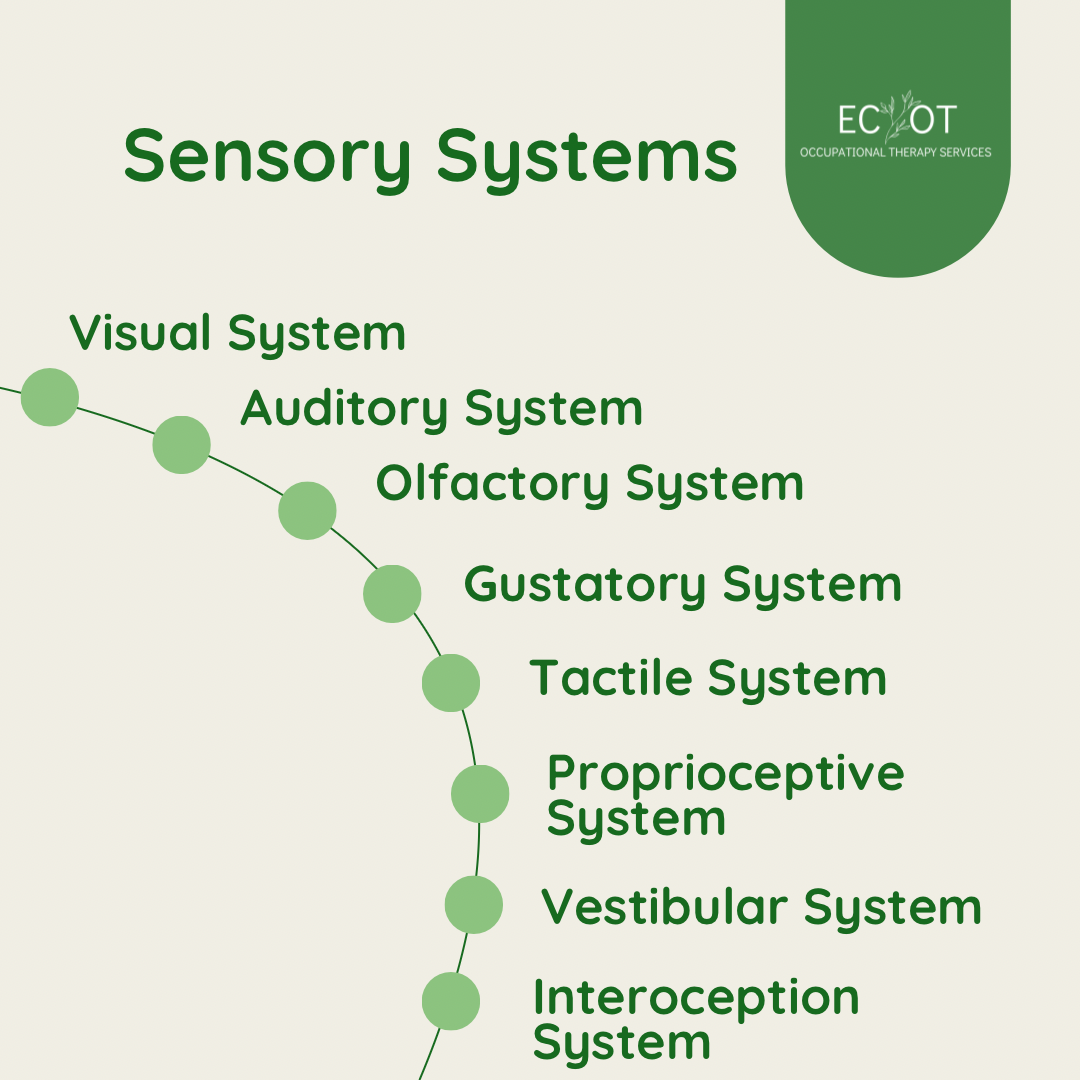
Our final of the five commonly known senses is the tactile system - our sense of touch. This system relies on receptors all throughout our skin to help to discriminate between what an object is and specific qualities about an object.
Signs Your Child May Have Tactile Processing Needs
Children can respond to textures in a variety of ways. Here are some behaviors you might notice:
Sensitivity to tactile input (over-responsive):
Is ‘picky’ about specific clothing, towel or bedding textures
Avoids messy play (ex. finger painting, playing in dirt or sand)
Can have significant reactions to things such as wet clothing or dirty hands
Self care tasks such as washing their face or hands, cutting or brushing hair can be distressing
Seeking more tactile input (under-responsive/seeking):
Seems to have a need to touch everything/ all objects
Prefers activities that allow them to ‘feel’ to learn. For example, multisensory activities such as writing letters in sand or shaving foam
Constantly touching other people
Low registration of tactile input:
Doesn’t seem to notice if there is a mess on their face or hands
Has a hard time discriminating objects based on feel alone (ie. may rely heavily on vision)
Avoidance of tactile input:
May become distressed when being asked to engage in messy play but will not leave the activity when at school
It’s important to remember: everyone has a sensory system. Everyone has specific preferences and dislikes regarding tactile sensation, if your child seems to have these preferences but it is not impacting their day to day functioning then this is okay! Concerns arise when interacting (or the lack of interaction) with tactile input is causing challenges with participation or is overly distressing to your child.
Supporting Tactile Needs at Home
If you suspect your child may have challenges with textures, here are some practical strategies to try:
For children who are over-responsive (sensitive):
Follow your child’s lead regarding their comfort level with different textures. Provide fun and safe ways for them to interact with different textures, for example sensory bins. No texture is ‘bad’ they are just different!
Provide opportunitites for short interactions with different tactile input. Allow the child to transition away from these activities as soon as they need to
Generally deep and firm pressure will be more well regulating than soft and light pressure
Provide reminders and warnings prior to interacting with a non-preferred texture
For children who are under-responsive or seeking:
Add different textures to their learning. Allow them to build, use manipulatives and engage in using different materials. Some of my favourites are, writing in shaving foam, using dominos for math, science experiments and sensory bins!
Provide clear reminders and expectations for what we can and cannot touch. If you are going somewhere where your child cannot interact with the items (Ex. a store) provide them a fidget tool to keep their hands busy and engaged!
Use vibration to help provide additional input. For example, a vibrating tooth brush or a hand held massager.
Supporting your child’s sensory needs can make a huge difference in their comfort, confidence, and participation in daily activities. The tactile system is closely linked to numerous of our other sensory systems and can play a significant role in how we understand the world around us. If you’re noticing that your child’s response to textures is interfering with daily life, it may be time to reach out for support.
At EC Occupational Therapy, we’re here to help you better understand your child’s unique sensory profile and find strategies that work best for your family.